 Fishbox
What does the Fishbox app teach you?
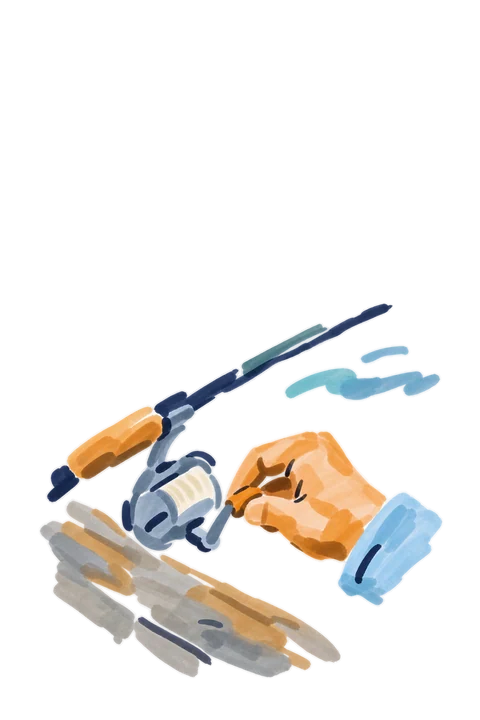
Fishbox is useful when you have a specific question about your tackle. Its Insights area includes educational guides and a Fishing Knots Guide. The developer also lists rig tutorials, casting material and an Assistant. If you have a tangle of line on the table and need to see where the tag end goes, a knot video is a practical tool.
Fishing gives you an order for the decisions that come before and after a tutorial. Start by checking the tackle you have. Then choose a connection, tie it twice, check how it seats and practice placing a cast. Each lesson includes an activity and three questions so you can check what you understood before moving on.
Fishing knots for beginners with line you actually use
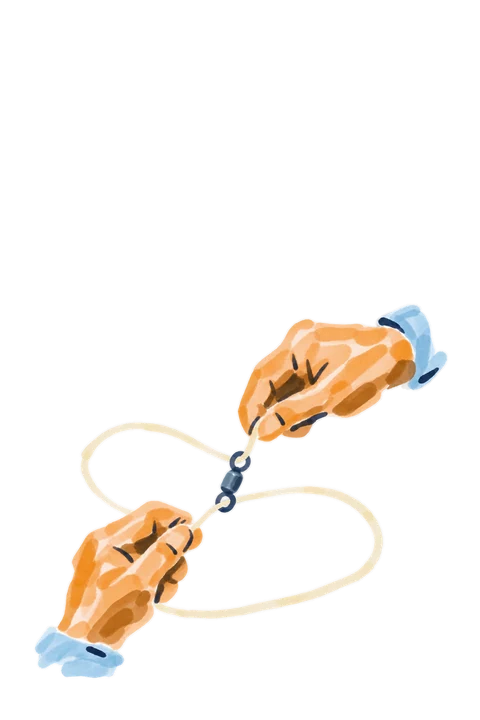
Start by naming the two things you want to connect. Tying line to the eye of a lure is one job. Joining a main line to a leader is another. In Fishbox, open Insights and look in the Fishing Knots Guide for a tutorial suitable for your connection and line material. If the line maker gives knot guidance, check that as well.
Use the Fishing exercise to see how your knot forms. Tie it with visible cord around a smooth practice ring, seat it according to the instructions and look at the turns. Repeat it with the same pieces. Then try the compatible knot with the line you plan to fish. Under a gentle test, watch for movement at the tag end. Retie a slipping connection before attaching working tackle. Compare whether both attempts seated in the same way.
Learn to build a fishing rig your rod can cast
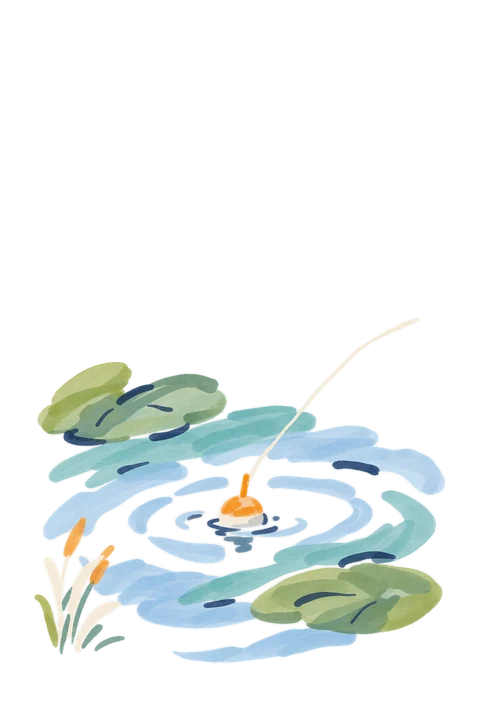
A Fishbox rig guide helps you identify the parts and where they go. Before assembling them, decide how you want the bait to behave. At a clear pond edge, for example, you might want it to hang below a float at a depth you can observe. Sketch the setup and label the part you would change if the bait hangs too deep or the float fails to settle.
Check what you plan to cast against the range printed on the rod or supplied by its maker. Include the hook, weight and bait when you work out the assembled load. Use the same units on both sides of that comparison. In the Freshwater lessons you can then compare how a small weight change affects the way a float rig settles, keeping the other parts the same.
Fixed vs sliding float rigs for beginners
A rig diagram tells you where the pieces go. Test what each piece does by comparing the two float setups in Fishing’s Freshwater lessons. A fixed float clips onto the line at a set point, so moving it farther from the hook lets the bait hang deeper when the rig is vertical. Start with that setup if you can comfortably cast it at the depth you want. Check where the float settles and whether it stays visible with the load.
A sliding float sits closer to the weight during the cast. After it lands, the sinking weight pulls line through the float until the stop reaches it. Use two hookless setups on a bench to compare them. Mark the target depth, then move the fixed float on one setup or the stop on the other and explain what changed. At the water, check whether the float settles and the line travels freely before changing the depth again.
Practice five casts after a video tutorial
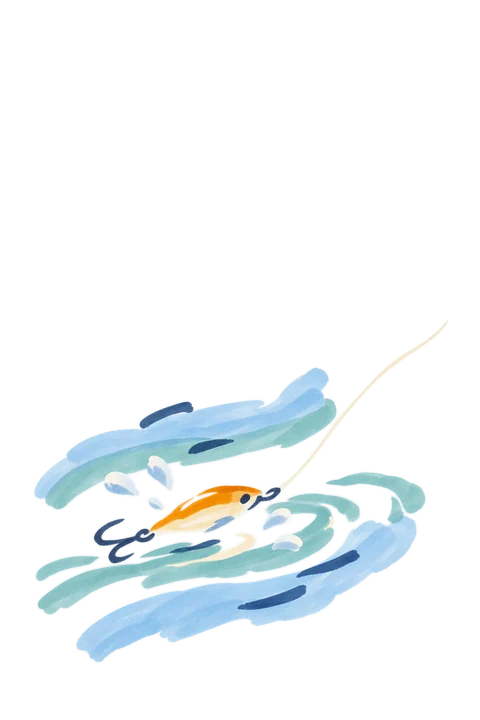
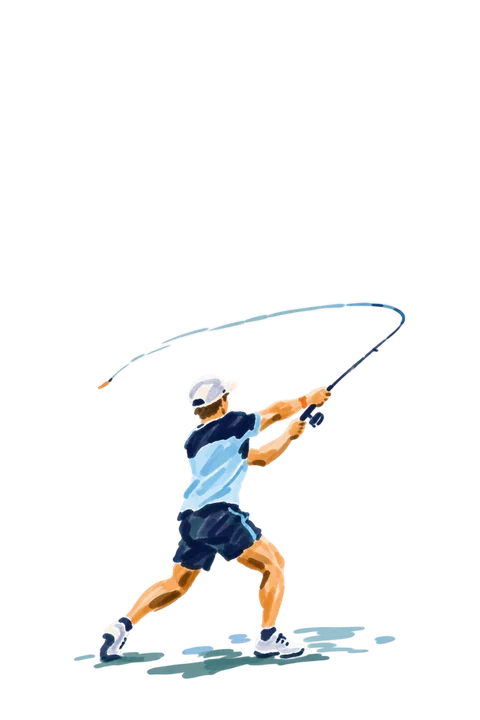
Choose an open area with a clear casting arc. Set a nearby towel on the ground and use a hookless practice plug within your rod’s rating. Make five short casts. Mark each landing point in relation to the towel. A tight group to one side gives you something specific to adjust. A widely scattered group gives you a reason to repeat the movement at the same distance.
Try a second set from the same spot using the same plug. Change one part of your motion, such as your aim, and draw the new landing points. The two groups give you feedback you can use even when you practice alone. Revisit the tutorial for the one movement you want to improve next.
Put the rig to work at a pond or river
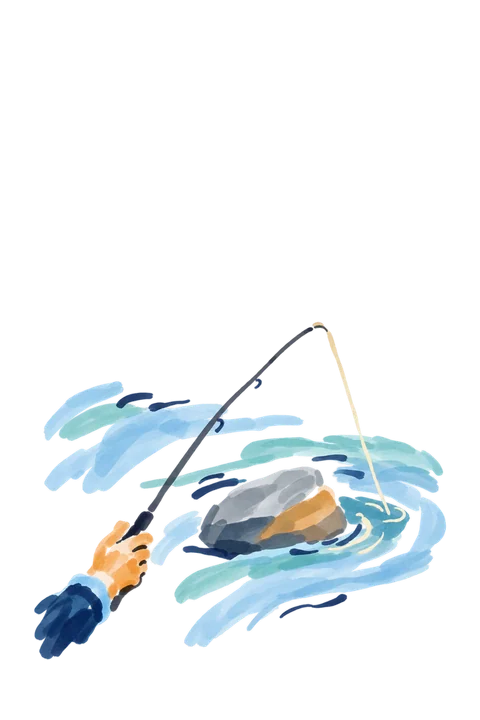
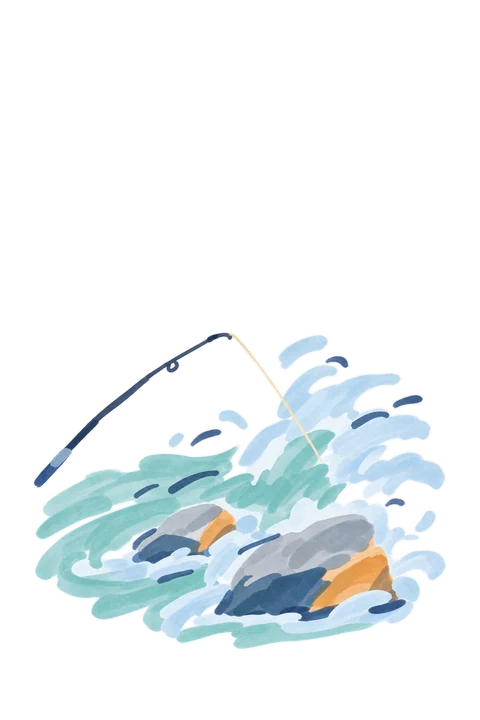
Pick an accessible bank where you can observe the presentation. A clear pond edge makes it easy to check whether a float settles where you expect. In a gentle river seam, watch how the line and float travel at different speeds. Keep the first test short and choose one thing to observe, such as whether the bait stays above the vegetation.
If the setup behaves differently when you move, record what changed. A deeper starting position or faster flow may call for a different adjustment. Decide which single change to try on the next set of casts. The Freshwater course covers fixed and sliding floats, sinker balance and casting around cover, so you can revisit the lesson closest to the problem you saw.
Check what you learned about knots and tackle
Try explaining your tackle choice before you pack up. Which two parts does the knot join? What is the total load on the cast? What would tell you the float is carrying too much weight? Answering these questions from the equipment in front of you helps you identify the part you need to practice next.
The Fishing lesson checks give you a scenario and an explanation after each choice. For a first look, take the free Freshwater practice quiz. Its questions show how you’ll think through a casting lane, bait depth and current. When you take the course, your account saves completed lessons so you can repeat the field activity when it’s useful.
Choose a Fishbox tutorial or a free course
Choose Fishbox when you want a certain knot video or rig reference at hand. It is available as a free download with optional purchases, so check the listing for the features and access available to you. Saving a reference can make it easier to find the same instructions while you put your tackle together.
Choose Fishing when you want a sequence you can work through from setup to the water. The shared foundations include matching rod, line and lure, tying and testing a connection and making controlled casts. Freshwater adds 16 lessons for ponds, rivers and lakes. All 24 lessons in that path are free. An existing knot video can still be the demonstration you use for a practice session.