Fish an unfamiliar pond or river
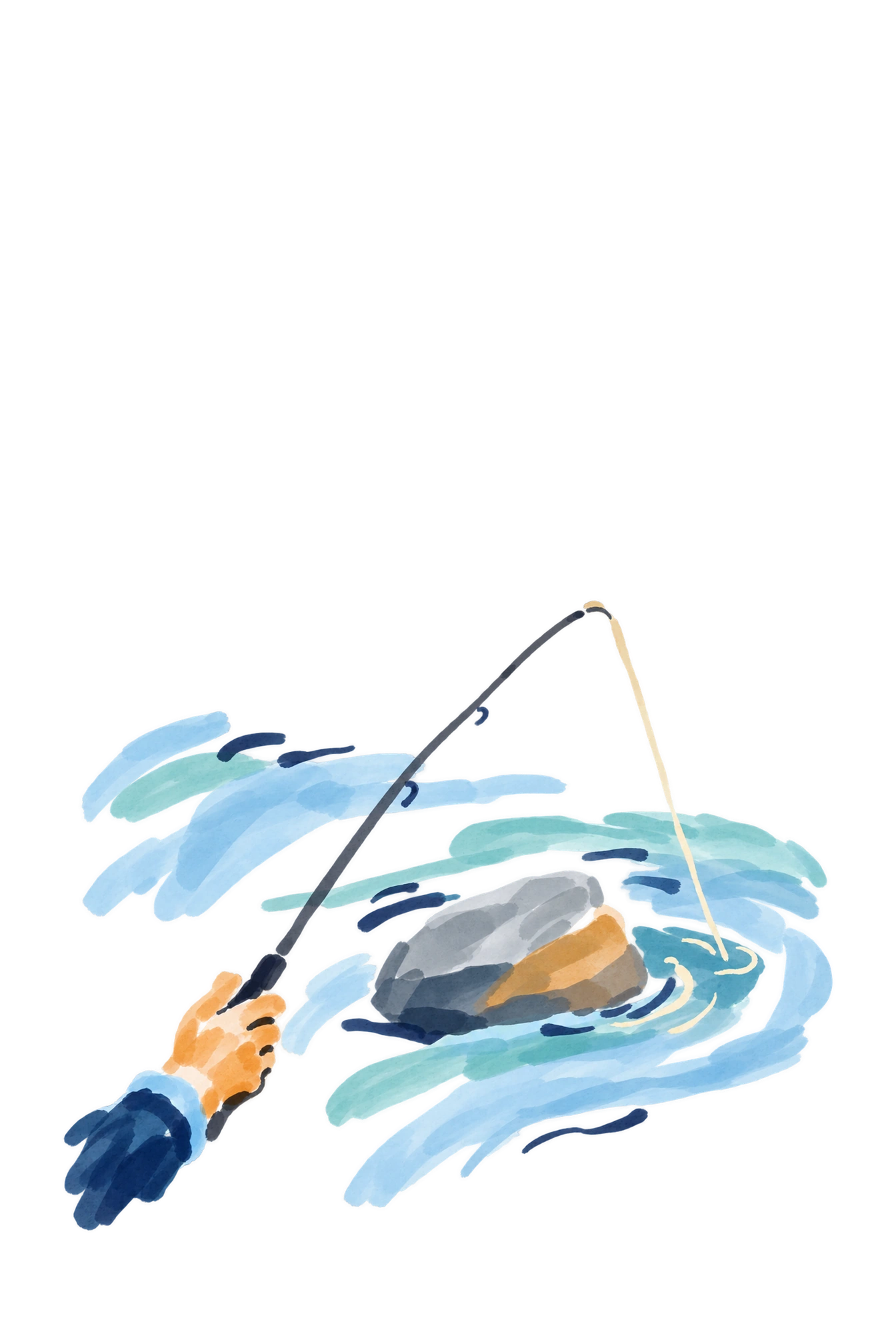
You can fish your regular pond from memory. At a new lake or river, every stretch of bank looks like a possible starting point. Use Fishing’s Freshwater course to practice choosing between those spots. Sketch two reachable lanes, decide what you want your rig to do in each and bring one observation back from the trip. The same process works on a pond margin and on a near-bank current seam.
Give the course a question from the water you’ll fish
Write down where you’re going and what usually gives you trouble in that kind of water. Maybe you’ve caught fish beside fallen wood at home and want to know how to spot a similar lane somewhere else. Maybe you’ve stood on a riverbank and watched the bait leave the current seam almost as soon as it landed. Choose a question you can answer by watching what the line or rig does. The notes you make during a lesson can then go with you to the actual spot.
When you start the Freshwater course, use the shared foundations to check access, fishing rules and the equipment you plan to take. Connect those checks to the session you’ve chosen. A useful exercise from Choose your water is to mark where you can stand, cast and land a fish. Applied to unfamiliar water, it helps you see how much of the bank you can use in practice. A wooded stretch with one clear opening gives you different options from an open bank you can move along.
Bring those limits into the field activities. Draw the bank well enough to mark an approach, likely cover and your intended starting point. Before the outing, keep uncertain details as questions. On arrival, use what you can see to confirm or revise the sketch. A path may end before it gets to the bend, or a depth break visible on a map may be well beyond what you can reach. Write the open questions in the margin so you remember to look before you set up.
Choose the first set of lessons for the water type you’re preparing for. At a pond, you’ll use the edge and depth lessons to compare where a lure travels. On a small river, you’ll use the current lessons to compare where the bait and the line travel. In both cases, use legal access and a position you can fish from with control.
Use the pond lessons to compare two casting lanes
In Read a pond edge, draw a shade line, a patch of vegetation or an open side of wood. Mark the first useful cast at each place, then draw the route the lure would take back. This part of the exercise is worth doing slowly. You may see that a cast inside an open-looking gap pulls straight through a branch on the return. Move the position on paper until the line stays beside the branch. The drawing gives you a decision to look for when you arrive.
Add Fish a weed edge if you expect plants along the shore. Draw one cast that crosses the edge and one that runs along it. Compare how long the lure would spend near cover and where you can bring it back cleanly. At the water, choose a clear portion of the bank with room to retrieve. Make the first comparison with a lure you understand. A familiar retrieve helps you see whether the different angle, rather than an unfamiliar lure action, changed the path.
You can bring the same exercise to deeper water using Explore a depth break. The activity has you trace one cast across contours and one roughly along a contour. On a broad shelf, crossing it lets you learn where depth changes during a retrieve. Following one part gives you more time around a similar band. Before the trip, decide which of those questions you want to test. When you’re at the bank, check that your planned lane gives you the distance and footing to do it.
In a Freshwater practice question, the lure repeatedly snags near a fallen tree. Look at your drawing before you answer. Find the open side and point to the path that keeps the lure alongside branches on the way back. If the feedback changes your answer, redraw the retrieve. That small correction is the part of the lesson you can carry to a different bank with similar cover.
Use the river lessons to follow the bait and the line
Open Find a river seam when you’re preparing for moving water. Draw a simple bend, a boulder and two nearby lanes of surface flow. The field activity asks you to follow floating material from dry ground or use suitable river footage. Mark where it moves more slowly and where it continues along the main flow. On the trip, look for a seam you can reach and follow from the bank. Compare what the surface tells you with what the rig actually does when it enters the lane.
Then work through Track a natural drift with a short stretch on the same sketch. Draw the expected route of a leaf and a second route for the bait once the main line bows into faster water. Mark where they separate. The point of the comparison is to give you something concrete to watch during a cast. If you see the rig slide sideways right as a loop of line lands in the faster water, you have a reason to try a closer position or a shorter entry.
Use the lesson scenario as a choice about your actual bank. Pick a place where the drift starts in view, a section you can watch clearly and a recovery point before the water reaches wood, another angler or an inaccessible turn. If the usable window is smaller than your drawing, shorten the drift. If flow or access has changed enough that you can’t control the lane, look for another firm bank or set the plan aside for another day.
After the trial, answer two questions in your own words. Where did the bait seem to follow the current? When did the line begin to change its path? The course feedback can help you explain the difference. Sketch the spot again with the line in its actual position. On the next cast, change one part of the plan and watch where the new drift leaves the seam. That is a specific skill you can rehearse at a different stream.
Use the lesson exercises to design one useful test
When you try unfamiliar water, you’ll see several things you could adjust at once. Decide what you want the next few casts to tell you. To find out whether one angle fouls less often, fish two angles at a similar depth and pace. To find out whether a pause puts a jig into weeds, stay in the same clean lane and compare two pause lengths. Work a small jig gives you that second exercise. Compare bait and lure helps you choose whether to hold beside a fixed target or work through a longer stretch.
You can set up a test even if you bring only one lure or use a float rig you already know. In the course, describe what would count as a clean pass and say where you’ll watch for a change. If the lure picks up vegetation right at the end of the retrieve, note the distance from shore and the way the line entered the water. The next cast could start at the same point and come back from a slightly different angle. Make the change while you still have a clear reference.
Bring a fallback along with the test. In Plan a freshwater session, the activity asks you to cover access, a presentation and what you’ll record afterward in a three-part note. Write an alternate position if the first is crowded or the water looks different. Give the alternative a whole path from casting through landing. Keep the tackle and presentation simple enough that the session still makes sense after you move.
Before you leave home, explain the plan to a companion as two decisions they could help you observe. For example, ask them to watch where a lure leaves the outer grass and whether the retrieve finishes in clear water. If the plan is for a river, ask them to follow the float until a landmark and call out when it slows or sweeps sideways. The more easily the other person can describe the event, the easier it will be for you to learn from it.
Rehearse the comparison at a place you already know
Use the Freshwater sketch on a familiar spot first if the new place feels hard to picture. Draw the first bank you normally fish and write why it works. A path may let you get alongside the weed edge, or a quieter lane on your side of a bend may let you watch the float. Pick one feature to look for at the unfamiliar water and give it an observable shape. “A line that runs beside the weeds until it reaches a clear return” is something you can recognize while you stand back from a new pond.
Then name one difference you expect at the new station. The edge could be farther out, the line could cross faster flow or an overhanging branch could make one approach awkward. Use the lesson that covers that difference. In Fish a weed edge, redraw the retrieve from two positions farther apart than the ones at your regular pond. In Track a natural drift, sketch the usual float path again with a wider stripe of fast water between you and the seam.
Check your reasoning against the lesson feedback and take both sketches to the trip. When you reach the new water, look at which part is still comparable. You can use a familiar cast if the return lane works. If the familiar approach keeps catching plants, write down where the difference appears and test your second position. The exercise lets you carry a decision from one place to another and check whether it applies.
Apply it on the bank and compare two stations
Imagine you arrive at an unfamiliar pond with a spinner and a soft plastic you know how to retrieve. You find a low bank beside shade and a path to a second station with open water along the outside of some grass. At the first place, the branch you picked from a distance blocks the route back. Your course sketch reminds you to look for usable water all the way to your feet. You move a few steps to keep the lure clear and run it beside the open edge.
At the second place, the lure sweeps across the shallow part of the grass and comes back fouled. You try a position where the same retrieve follows the outside of the edge. The second route stays clear longer. If it draws a tap, record where the lure was on the retrieve. If it stays quiet, record how the angle changed the amount of time the lure spent beside cover. Either result gives you a useful comparison with the shaded lane you tried first.
Give the new observation a fair label. You know the second position let you retrieve more cleanly under those conditions. You can try that position again, and you can look for a similar shape at another pond. A bite is one additional clue. Casting from two positions with the same presentation gives you a clearer way to understand a different result on another visit.
Use your session note to choose what to practice next
Return to Keep a session note with a few details from the trip. Record the feature you tried, how long you fished it and the one change that affected the rig. Separate what you saw from what you think caused it. A note that the bait swung away from the seam gives you a particular current problem to revisit. A note that both retrieves came back clean but at different paths tells you where to focus the next comparison.
Open the course again and go back to the explanation for the decision you struggled with. If the float pulled across the seam, redraw the before and after paths in the river lesson. If a lure fouled just as it approached shore, revisit the pond edge exercise and mark the last part of the retrieve. The next visit gives you another chance to test the revised plan. You can use the same cycle on familiar water when changing water level or vegetation gives you a new decision to make.